
Browse: 10610 objects
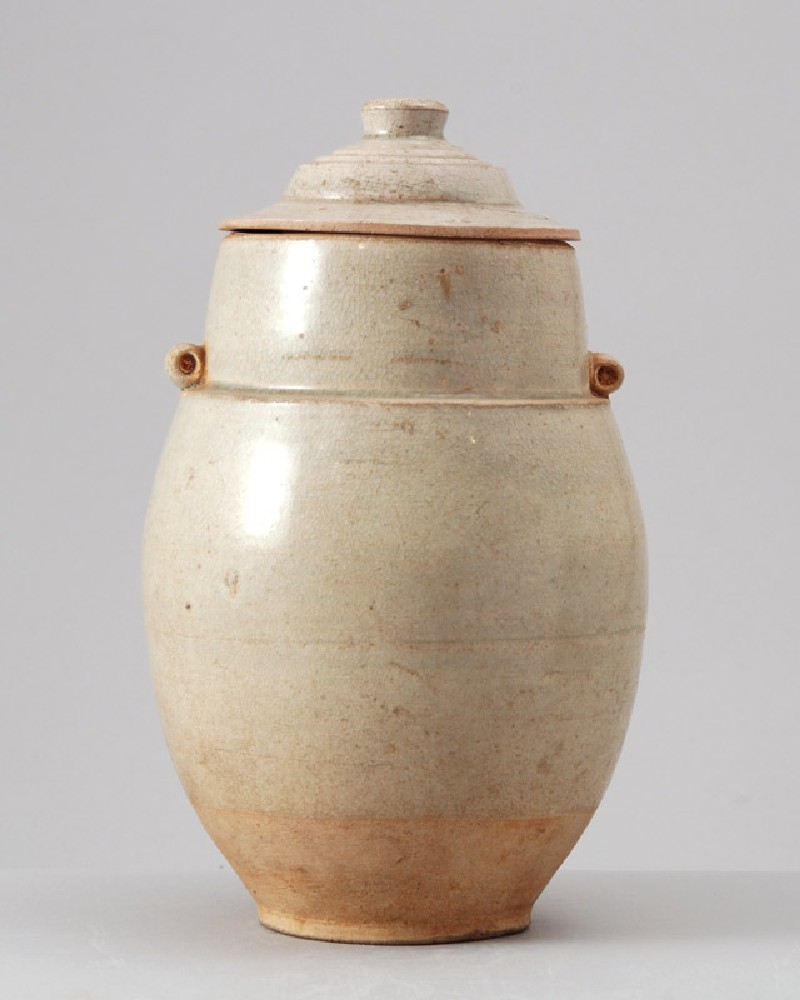
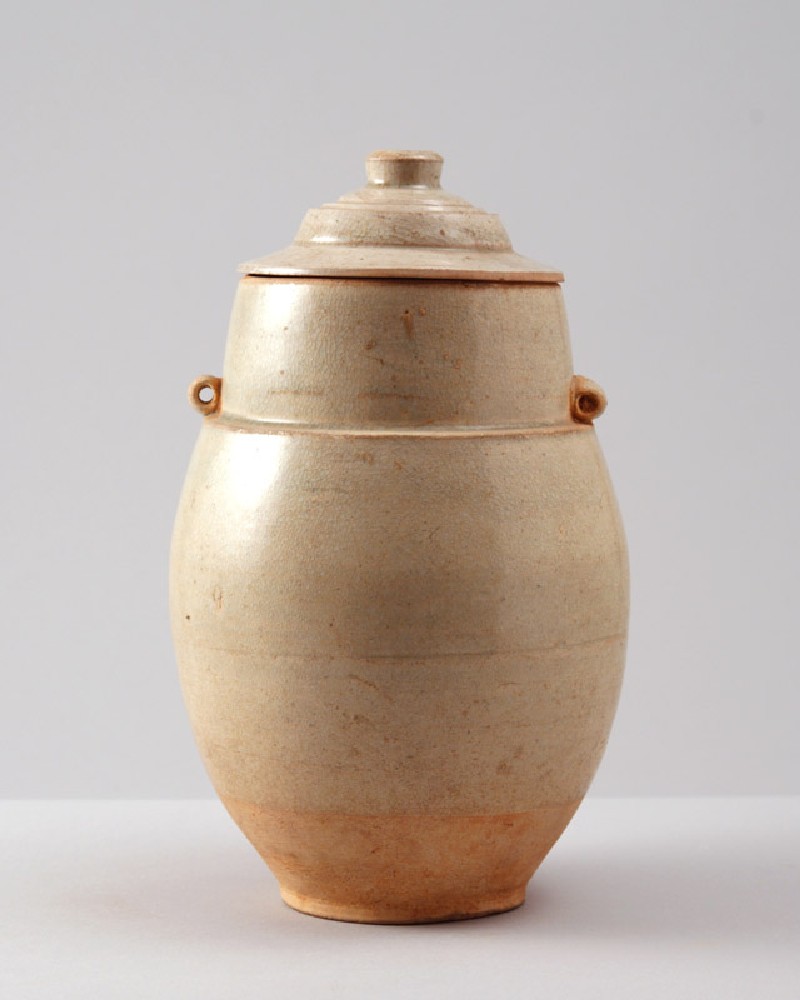
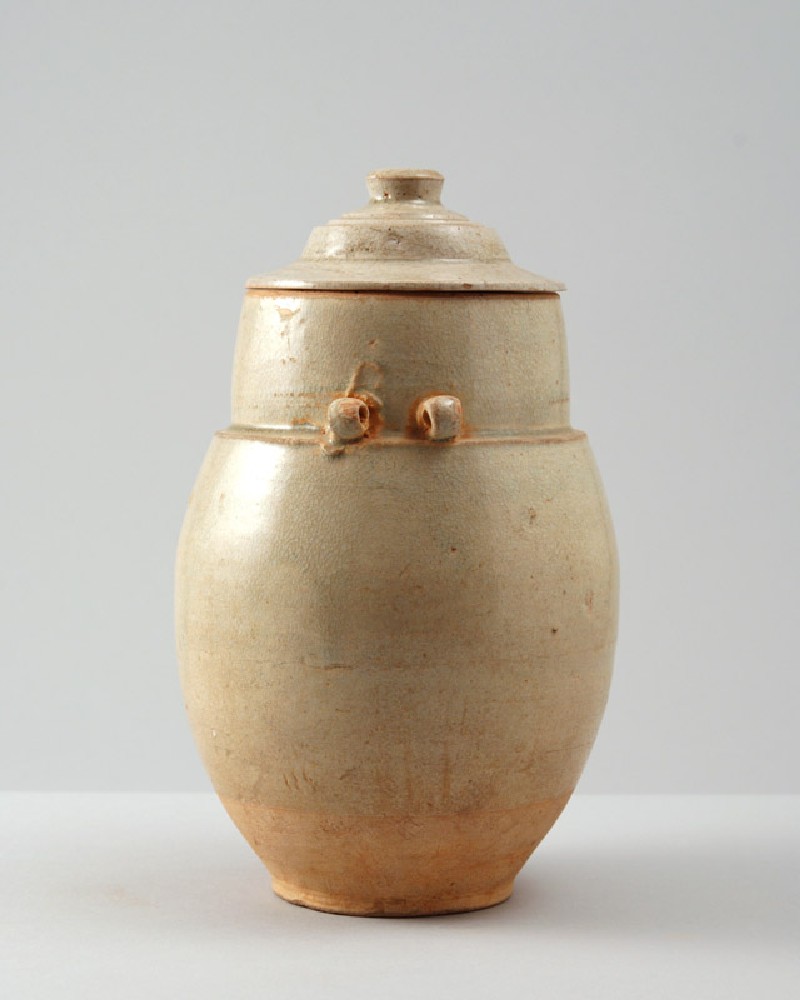
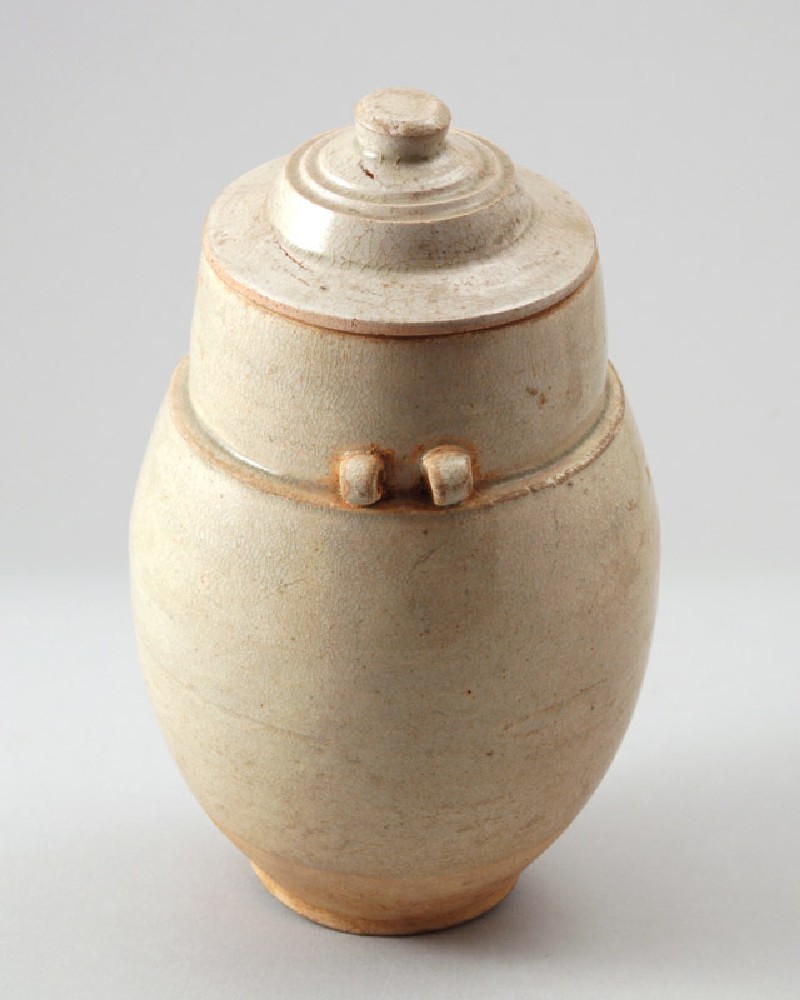
White ware funerary jar and lid
- loan
-
Details
- Associated place
- Date
-
13th century (1201 - 1300)
Southern Song Dynasty (1127 - 1279)
- Material and technique
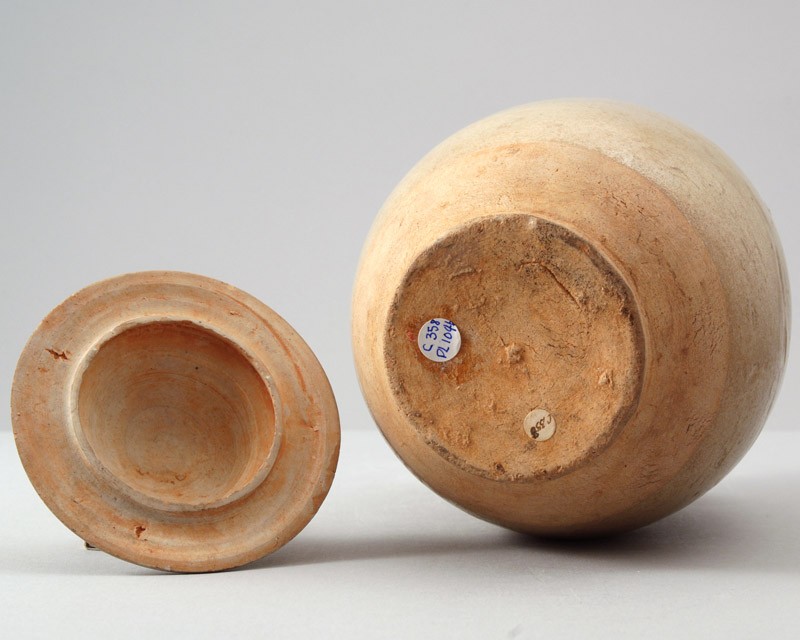
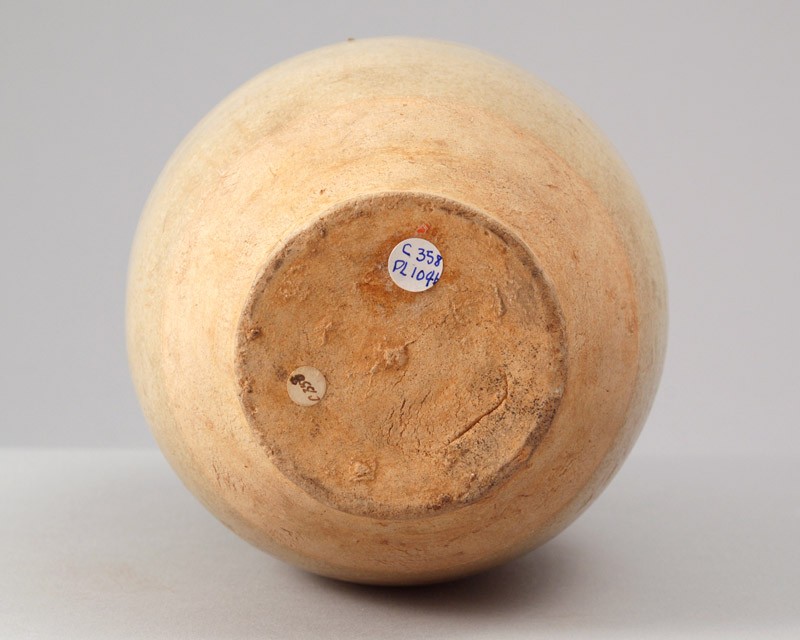
- porcelain, thrown, with hand-modelled handles luted to the jar with slip under a bluish-white glaze (qingbai ware); unglazed base; unglazed rim
- Dimensions
-
24.1 cm (height)
14.5 cm (diameter)
at base 8 cm (diameter)
- Material index
- Technique index
- Object type index
-
container › vessel › pot › burial-pot,
- No. of items
- 2
- Credit line
- Lent by the Sir Alan Barlow Collection Trust.
- Accession no.
- LI1301.358
-
Further reading
University of Sussex, and Arts and Humanities Research Council, The Barlow Collection, supervised by Regina Krahl, Maurice Howard, and Aiden Leeves (Sussex: University of Sussex, 2006), no. C358
Glossary (4)
glaze, luted, porcelain, slip
-
glaze
Vitreous coating applied to the surface of a ceramic to make it impermeable or for decorative effect.
-
luted
The fusion of parts of ceramics using dilute clay slip.
-
porcelain
Ceramic material composed of kaolin, quartz, and feldspar which is fired to a temperature of c.1350-1400⁰c. The resulting ceramic is vitreous, translucent, and white in colour.
-
slip
A semi-fluid clay applied to a ceramic before glazing either to coat the surface or for decorative effect.
Location
-
- currently in research collection
Objects are sometimes moved to a different location. Our object location data is usually updated on a monthly basis. Contact the Jameel Study Centre if you are planning to visit the museum to see a particular object on display, or would like to arrange an appointment to see an object in our reserve collections.
Publications online
-

The Barlow Collection
A similar jar without cover, excavated in Anyi county, Jiangxi province, can be dated to 1249.
The jar is of ovoid form, slightly flared towards the flat base, with a wide, somewhat splayed neck, with an angle at the shoulder where two pairs of tubular lugs are horizontally attached. The stepped cover has a sloping everted rim and a straight knob with two deep grooves around it. The yellowish-beige stoneware is covered with a thinly applied glaze with faint bluish-green tinge, visible mainly in the groove around the shoulder. The glaze was wiped from the rim but covers part of the neck inside, the lowest part of the jar, the base and the underside of the cover are exposed in the yellowish-burnt biscuit, which has fired a deeper orange colour inside the jar. -
The Barlow Collection
A similar jar without cover, excavated in Anyi county, Jiangxi province, can be dated to 1249.
The jar is of ovoid form, slightly flared towards the flat base, with a wide, somewhat splayed neck, with an angle at the shoulder where two pairs of tubular lugs are horizontally attached. The stepped cover has a sloping everted rim and a straight knob with two deep grooves around it. The yellowish-beige stoneware is covered with a thinly applied glaze with faint bluish-green tinge, visible mainly in the groove around the shoulder. The glaze was wiped from the rim but covers part of the neck inside, the lowest part of the jar, the base and the underside of the cover are exposed in the yellowish-burnt biscuit, which has fired a deeper orange colour inside the jar.
© 2013 University of Oxford - Ashmolean Museum